Just another Sleddoggin.com Blogs weblog


What Makes A Good Lasik Candidate?

Los Angeles eye surgeonAs one of the most common outpatient vision correction procedures, Lasik surgery is a relatively straightforward process with the treatment itself taking only minutes. Los Angeles eye surgeons and surgeons in the world perform Lasik surgery on approximately one million eyes every year and it is no different than any other surgery

Laser Assisted in Situ Keratomileusis (Lasik) is intended to eliminate or reduce dependency on eyeglasses or contacts. Beverly Hills Lasik surgery has become more and more popular as the decades progress but still Laser Eye Surgery is not for everyone. Alternative surgery procedures like PRK and Lasik are excellent alternatives to glasses and contact lenses for patients suffering from myopia (nearsightedness), hyperopia (farsightedness), and astigmatism as well as a wide range of other vision conditions.

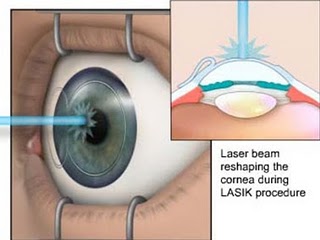
A procedure like this can permanently reshape the cornea, which is the clear covering of the front of the eye with the help of a laser. Most patients do not report any problems after the Los Angeles Lasik laser surgery. There are a wide variety of different optical lasers used in this procedure but common for all of them is that the laser will remove some tissue from the cornea.

Patients who have reached or are close to reaching the age of 40 should consider that their vision may be affected by conditions that cannot be treated with Lasik surgery, such as presbyopia. Patients with certain medical conditions or taking certain medications should not choose Lasik surgery because of the implication that it might give, according to top professional Beverly Hills Lasik surgeons. If you’re pregnant or nursing you will fall out of the ideal candidate classification and as it is advised to wait before considering laser vision correction. Patients with a condition called keratoconus are ineligible for the procedure and so are patients who have high levels of refractive error. Both parties are at a slightly higher risk for post-surgical astigmatism.

Laser vision correction surgery is an extraordinary procedure that has helped thousands of people see better and is an exciting opportunity for anyone who suffers from vision problems. Lasik surgery is the preferred vision correction surgery these days, despite its high cost. This type of surgery is however generally not the best option for older patients suffering from age-related conditions. Often these conditions can’t be treated with the Lasik procedure. To learn more about Lasik and laser eye surgery, contact you local Lasik eye specialists to learn more.
Three Things To Consider In Choosing The Right Laser Eye Surgeon

Los Angeles eye surgeonIt has been close to twenty years since the laser-assisted in situ keratomileusis procedure (Lasik) was first used in the US, and worldwide, about 3 million laser eye correction surgeries are performed annually. About 2 million to 2.5 million are in North America; about 1.6 million are in the United States alone. With the number of laser eye patients who go in to see their Los Angeles eye surgeon to undergo laser vision correction surgery steadily increasing, more and more people have questions about this vision correction procedure.

A $2-billion industry, Lasik technology in the hands of an experienced, expert Beverly Hills Lasik surgeon has consistently accommodated the needs of people to get rid of their glasses and contacts through laser eye surgery.

Whether it be in Los Angeles or Beverly Hills Lasik eye surgery has always been about the quality and the service of the surgeon providing the procedure. With regards to quality, it is very important to select a laser eye surgeon who is not only certified but experienced with completing numerous successful surgeries. Getting recommendations from known sources is also very useful in locating the right Lasik surgeon. And in terms of service, Los Angeles Lasik patients must consider the kind of care that their surgeon and staff offer before, during, and especially after the procedure.

Lastly and equally importantly, when considering laser eye correction, is what type of eye correction laser to have. Patients are encouraged to research and narrow down the kind of Lasik technology that is right for their needs and budget through consultations, customer testimonials, and personal research. It is advisable to inquire about the wide variety of treatments a laser eye surgeon offers, and select the most appropriate one for one’s own circumstance.

Laser Eye Surgery And Dry Eyes

Los Angeles eye surgeonEveryday, a large number of people live with an actual, medical condition referred to as dry eye. When an person’s eyes don’t generate a sufficient amount of tears to maintain adequate lubrication, dry eye occurs and there are many ways people experience this condition depending on the individual. Los Angeles eye surgeons explain that individuals with dry eye may experience a feeling of scratchiness in the eyes, a burning sensation, large amounts of mucous, sensitivity to wind and smoke, and increased light sensitivity. Oddly, individuals with dry eye may also experience excessive tears as the lacrimal glands, which produce tears, try to compensate for the lack of lubrication.

Laser-Assisted in Situ Keratomileusis, also known as Los Angeles Lasik eye surgery, is a procedure to correct vision in patients who experience myopia or nearsightedness, hyperopia or farsightedness, and astigmatism.

Among most people who undergo this surgery by a qualified, experienced Lasik surgeon Los Angeles patients end up with 20/20 vision or better without complications, however, LASIK can sometimes leave some patients with dry eye. This is especially true if the patient had dry eye prior to the surgery. In those cases, candidate screening was inadequate and the surgery should not have been done.

During Beverly Hills Lasik eye surgery, the surgeon cuts a thin corneal flap so the cornea can be reshaped underneath the flap using a laser. Creation of the flap inevitably cuts some of the corneal nerve fibers related to tear production. The lacrimal glands are beneath the upper eyelids and just below the eyebrows. They produce tears which flow through a drainage system and flush debris from the eyes. When these nerves are disrupted by flap creation, tear production is reduced and this happens in all Lasik procedures. In most cases the nerves regenerate within a few months and tear production becomes normal. In the meantime, moisturizing eyedrops are prescribed.

Usually dry eyes are a disqualifying condition for Lasik. But an eye surgeon will assess each individual and make a judgment call. It can be treated or managed. Prescription eyedrops can help. Your eye surgeon may insert plugs into the tear duct openings (the puncta; singular is punctum). These openings are in the inner corners of the eyes and allow tears to drain from the eyes into the nasal passages. Punctal plugs reduce tear drainage to keep the eyes better lubricated. Special lubricating drops may also be prescribed for people with mild dryness prior to Lasik surgery to minimize potential complications.

When considering Lasik eye surgery, be sure to inform your Lasik surgeon of your medical history, including any previous diagnosis of dry eye, as well as medications you are currently taking. This will help the surgeon provide you with the most effective, comfortable post-op experience possible. To find out if you are a candidate for Lasik eye surgery, the first step is to contact an experienced Lasik surgeon to learn more.

Which Laser Eye Correction Treatment Is Best For Me?

Los Angeles eye surgeon

The most popular variation of laser treatment is called Lasik (for “laser in-situ keratomileusis”). In this technique, the Los Angeles eye surgeon applies the laser upon the cornea, rather than near the corneal surface. This is accomplished by creating a protective flap in the front 20-25% of the cornea and then applying the laser treatment to the tissue beneath the flap. This protective flap can be made with a laser or with a keratome.

The vision correction treatment can also be applied near the surface of the cornea (instead of under a protective flap), in which case the technique is referred to as Advanced Surface Treatment, or “Lasik without a flap”. This technique has several minor variations, which include PRK (for “photo-refractive keratectomy”), Lasek, and Epi-Lasik.

In PRK, the thin layer of soft tissue coating the outside of the eye (the epithelium) is removed and the Beverly Hills Lasik surgeon applies the laser energy to the firm tissue underneath.

In Lasek-with an “e”-the soft tissue on the surface is replaced after the laser treatment. In Epi-Lasik, this thin layer of soft material is folded back using a machine. PRK, Lasek, and Epi-Lasik are very similar to each other.

When the laser treatment is applied to the tissue deep within the cornea (as in Lasik) instead of near the surface (as in Advanced Surface Treatment), the healing is quicker with more rapid vision recovery. Patients usually see quite well the next day after a Los Angeles Lasik treatment. In “Lasik without a flap” the intial healing takes about a week. However, after the healing period is complete, the results are the same with each of these techniques.

Lasik requires an additional surgical step, which is the creation of the protective flap. The flap is created with an instrument known as a keratome or with the IntraLase laser. Creation of the flap takes about 15 seconds and is virtually painless. Complications with the flap occur about 1% of the time. Almost all of the complications are mild and can be easily treated, often by lifting or repositioning the flap. The most serious complication would involve improper creation of the flap; when this occurs, the patient is asked to wait three months, and then can return for a repeat treatment.

With either Beverly Hills Lasik or “Lasik without a flap”, there are two types of computer software that can be used, known as conventional and Custom. Both of these use the same laser to perform the vision correction treatment. The conventional software works like glasses or a contact lens; there is one prescription that covers the entire eye. Obviously, this produces excellent vision, just as do glasses and contact lenses. With Custom treatment, an additional modification is made in the treatment to account for additional irregularities in the vision. On average, the Custom treatments produce slightly better vision than the conventional software.

At the Caster Eye Center, we perform all of the variations of laser vision correction. All of the variations produce excellent vision. During your consultation, we will obtain measurements of your eyes, and Dr. Caster will personally talk to you and determine which procedure is the best for your specific situation. In this careful way, we obtain the best vision possible for our patients.

Answers: Advanced Surface Treatment LASIK Without A Flap

Many of my friends have had Lasik. Why do you sometimes recommend “Lasik without a flap”?


According to a top qualified
Los Angeles eye surgeon, there are certain people for whom “Lasik without a flap” is the preferred technique. In the following situations, “Lasik without a flap” is the safer choice: moderate to extreme dry eyes, very thin corneas, thin corneas combined with large corrections, irregular topography (curvature test) that may indicate an inherent weakness in the cornea, or hobbies or professions (such as boxing) where there is a very high likelihood of being hit in the eye. Safety needs to be our most important consideration, and for these certain people, “Lasik without a flap” is safest.

What Are The Disadvantages Of “Los Angeles Lasik Without A Flap”?

There are two disadvantages. The main disadvantage is that “Lasik without a flap” takes longer to heal. The vision is often around 20/40 to 20/50 during the first week. 20/40 vision is required to legally drive a car. You will certainly have adequate “walking around” vision to perform most daily tasks, but it is certainly possible that you will not see well enough to legally drive or see clearly enough to work at a computer or read extensively during the first week. Although most people choose to have both eyes treated on the same day, some people choose to have “Lasik without a flap” one eye at a time, and then they can work during the first week while the eye is healing. With Lasik, most people return to work the very next day. The second disadvantage is on and off discomfort during the first week, which is very well controlled with “comfort” drops as well as anti-inflammatory pills.

Do you perform other forms of laser vision correction in addition to
“Lasik without a flap”?

Among the many services provided by your experience Lasik doctor Los Angeles patients have all the variations of laser vision correction, including Lasik, IntraLasik (Lasik with a laser flap), and “Lasik without a flap” available as possible laser eye correction options.

I want the Custom Wavefront treatment. Can I have that with “Lasik without a flap”?

Yes, we can perform the Custom Wavefront treatment with Lasik, IntraLasik, and “Lasik without a flap”.

How is “Lasik without a flap” performed?

As explained by a top Lasik surgeon Los Angeles without a flap uses the exact same laser as Lasik or IntraLasik. However, instead of creating a flap (which is the thickness of a human hair) and then performing the treatment on the part of the eye under the flap, the treatment is performed near the surface of the eye. This is why this technique is often referred to as Advanced Surface Treatment. The thin layer of material covering the surface, which is very soft, is wiped away, and the laser treatment is then applied to the firmer material underneath.

Which gives better results: Lasik, IntraLasik, or “Lasik without a flap”?
In our hands, the final vision is the same with each of these variations. Lasik provides the most rapid return to excellent vision, followed by IntraLasik, and then “Lasik without a flap”. We want to make the recovery as easy and quick for you as possible, but our main concern is which technique will be the safest technique for your particular situation.

What care is required after “Lasik without a flap”?

A special contact lens, which we put in and later take out, is worn for 5-7 days. You will need to take antibiotic and anti-inflammatory drops, and we will give you anti-inflammatory pills.

Is “Lasik without a flap” very common?

About 10% of the laser treatments in the United States are “Lasik without a flap”. It has been performed since 1995, and very significant improvements have taken place over the years. Advanced Surface Treatment is becoming more popular each year, as doctors understand that for certain groups of people it is the safest choice.

The Treatment Is Easy

Drawn from top Los Angeles eye surgeon Dr. Andrew Caster’s book Lasik: The Eye Laser Miracle, the following takes the patient step-by-step through the laser vision correction process from start to finish.

Los Angeles Lasik Laser Vision Correction Very Easy Procedure To Undergo

No injections are needed, and there is no pain during the procedure. These are the steps you will experience:

  1. 1. Your doctor will measure your eyes to determine your amount of nearsightedness, farsightedness, and astigmatism. During this presurgical consultation, your doctor will complete a thorough examination of the health of your eyes and discuss the procedure in detail with you.

2. The laser will be calibrated and tested for accuracy.

3. The correction desired for your eye will be entered into the laser’s omputer.

4. The computer will determine the specific set of laser pulses to apply.

5. You will be brought into the laser room and asked to lie down.

6. A patch will be placed over the eye not having the procedure.

7. Anesthetic eyedrops will be place in the eye. No injections or IVs are needed.

8. Your eyelid will be held open with a small speculum, which causes no pain.

9. You will be asked to look at a small blinking light.

10. In Lasik, a small layer of tissue, known as the corneal flap, will be separated and lifted. In PRK, the Beverly Hills Lasik surgeon will gently wipe away the soft, superficial layer covering the cornea.

11. You will hear a clicking noise, the sound of the laser.

12. The blinking light will get hazy as the treatment progresses.

13. The treatment will usually take less than thirty seconds of laser time.

14. Eyedrops will be placed in the eye. In some cases, a temporary contact lens will be placed in the eye as well.

15. In most cases, the procedure will then be repeated for the second eye.

16. You will sit up and rest for a few minutes before going home. Your stay in the treatment room has lasted about five to ten minutes.

Sounds easy, doesn’t it? And it is. But how accurate are the results? What can go wrong? Are you a suitable candidate for laser vision correction or should you consider alternatives? These questions can be effectively addressed by your Beverly Hills Lasik eye surgeon.