Just another Sleddoggin.com Blogs weblog

Archive for October, 2010


Lasik : Common Lasik Questions
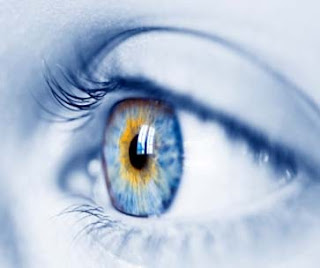
LasikLasik eye surgery is the most commonly performed laser eye surgery in America. Every year the number of people who desire Lasik eye surgery and the number of people who undergo the procedure increases in large numbers. Many people are aware of the procedure is out there and know what the goal of it but are not sure how the Lasik procedure is performed and have several questions which are common for prospective Lasik candidates.

The Lasik procedure beings with the creation of a hinged corneal flap. After the Los Angeles Lasik surgeon has set drops of anesthesia in the eye, he creates the flap on the outer surface of the eye to expose the underlying cornea. The cornea is then reshaped using an excimer laser and the flap is replaced. After the surgery some patients experience immediate improved vision, but the vision can take up to six months to stabilize.

Here are some of the common questions asked about Lasik eye surgery:

Is Lasik safe?
Lasik and all other laser vision correction Los Angeles procedures are safe provided that one is a good candidate for the surgery. Lasik eye surgery holds a success rate of about 95% for most experienced Lasik eye surgeons. One must always do their own research apart from what the surgeons says to identify if he or she is a good candidate. Remember that if one undergoes such procedure and is not a good candidate the risk of having bad side effects run high.

What are the risks associated with Lasik?
One’s Lasik surgeon Los Angeles should discuss the risk of Lasik eye surgery with the patient prior to the procedure andmay even give them a sheet with a list of side effects. The risks include:

  • Starburst
  • Difficulty with glare and night vision
  • Foreign body sensation
  • Ghost vision
  • Blurry vision

Most of these side effects are temporary and do past within a few days and sometimes weeks after surgery. Approximately one to two patients have permanent side effects.

Is Lasik eye surgery painful?
Because there is a very small amount of tissue involved in the procedure it is usually painless for most patients although some patients do complain of some discomfort. Other patients say it feels as if pressure is being applied to the eye; however it is not painful.

What Results should I expect from Lasik?
Although many surgeons say they can ensure 20/20 they cannot. Statistics show that every patient does not have applied 20/20. One should expect better vision and in most cases reduced or no dependencies on corrective eye wear.
Lasik Eye surgery Candidates

LasikThe most commonly performed laser vision correction surgery is Lasik. Lasik surgery is known to be very safe and highly effective for several refractive problems. During Lasik eye surgery the surgeon will reshape the cornea in a fast and painless procedure. The procedure generally takes no longer than fifteen minutes and is done with machinery. Some patients say claim they feel a bit uncomfortable because of the drops and tool to keep the eyes open, but no pain at all. The Lasik procedure reduces the patient’s dependency on corrective eye wear often leaving the patient with 20/20 or 20/40 vision. Although the Lasik procedure has great success rates it is conducted on a very delicate part of the eye where several things can go wrong especially if one is not a candidate.

A patient should always understand the importance of a thorough screening and maintain realistic expectations about their procedure. There are people who do not fit the required medical criteria to ensure that Lasik or another laser vision correction Los Angeles procedure can be performed with success. In some cases patients who are deemed as not being good candidates for Lasik due to the current technology may be able to have the surgery in the future, as technology makes significant advances and techniques are further perfected. Anyone interested in undergoing Lasik eye surgery must go through an examination where a Los Angeles eye surgeon will determine if he or she is a candidate for surgery; each candidate will fall into one of three categories. These categories are:

The ideal Lasik Candidate:

  • Eighteen years of age and has had a stable prescription for glasses or contacts for two or more years.
  • Must have sufficient corneal thickness. Lasik patients must have a cornea that is thick enough to allow the surgeon to safely create a clean corneal flap of appropriate depth.
  • Are affected by one of the most common refractive errors, nearsightedness, farsightedness, astig-matism or a combination of three. Many lasers are no approved by the U.S. food and drug administration as safe and effective for Lasik, but the scope of each laser’s approved indication and treatment range is limited to specified degrees or refractive error.
  • Does not suffer from any disease vision or non-vision related because it still may affect the effectiveness of the surgery or prevent the eyes from healing properly.
  • Are properly informed about the risks and reward of the surgery had realistic expectations and understanding.

The less than ideal Candidate:

  • History of dry eyes – The chances that the condition may worsen after surgery is too high.
  • Have scarring of the cornea
  • Under the age of eighteen
  • Being treated with medications such as steroids or other medications which may prevent the healing process from properly taking place.
  • Are pregnant or nursing
  • Have a refractive error to severe which make the cornea to thin and too risky to operate.
  • History of herpes
  • The Non- Lasik Candidate: There are conditions that may eliminate an individual from undergoing Lasik with the current technology to protect their eye sight from being further damaged.
  • Disease such as cataracts, advanced glaucoma, corneal diseases, corneal thinning disorders, and other types of disease that threaten the vision
  • Do not signed consent allowing the surgeon to perform Lasik. Patients must understand the risk and procedure in detail. Signed consent is required to perform the surgery and verify that the patient clearly understood.

Unrealistic expectations. Often times when patients have unrealistic expectations they are very disappointed although the Lasik doctor Los Angeles may have done an impeccable job.